
Echoes of Love and Legacy: The Sacred Roots of Music in the African American Church
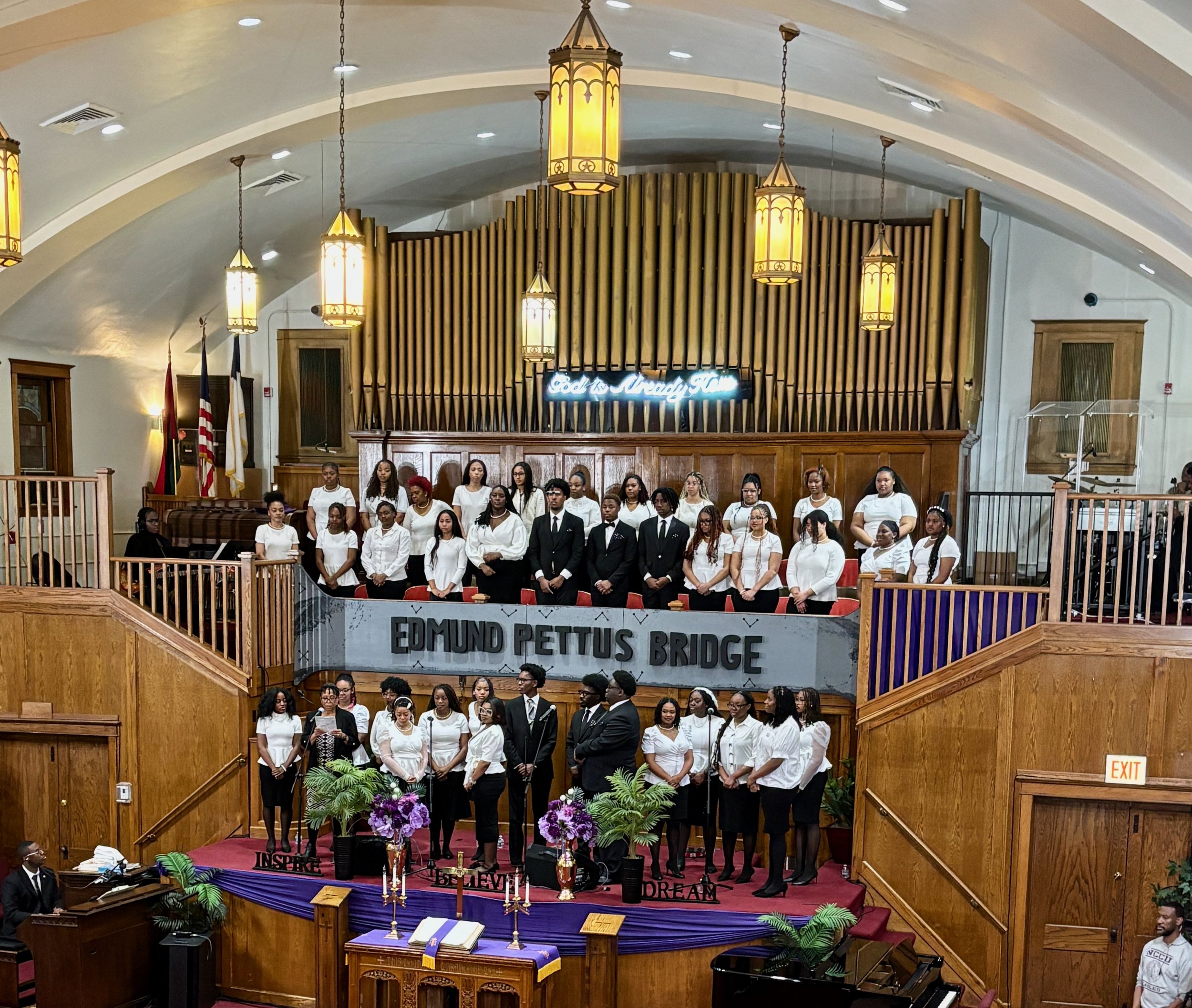
Howard University Gospel Choir
The program billed the event as “A night of Worship” featuring The Howard University Gospel Choir. The venue was the Second Baptist Church in Evanston where the pews overflowed with believers. What I found myself worshiping, however, was the music. Preachers preached in melodic voices while singers sermonized, illuminating sacred passages with their harmonies during this Monday night performance.
Large letters inscribed across the dais read, Edmund Pettus Bridge and separated an upper and a lower stage filled with college students dressed in white and black singing the black national anthem, “Lift Every Voice and Sing”. I was an emotional goner.
The young voices transported me to memories of the Jeremiah Project, an after school and summer ceramics program I directed for eighteen years. Sixth, seventh, and eighth graders (and an occasionally errant fifth or nineth graders who didn’t want to be left out) from Boys & Girls clubs across central Florida visited our pottery studio housed on the second floor of a congregational church. It wasn’t uncommon for two or three to spontaneously erupt in a gospel version of “Shall we Gather at the River” with no rehearsal or accompaniment, while their hands surrounded a lump of clay on a spinning pottery wheel or sculpted a clay dragon. Occasionally voices projected from the microphone of the pulpit where the Congregational minister delivered his Sunday morning homily. It was gratifying to me that these students felt an acceptance in our church whose history included being the first church founded in what is now affluent, Winter Park Florida.
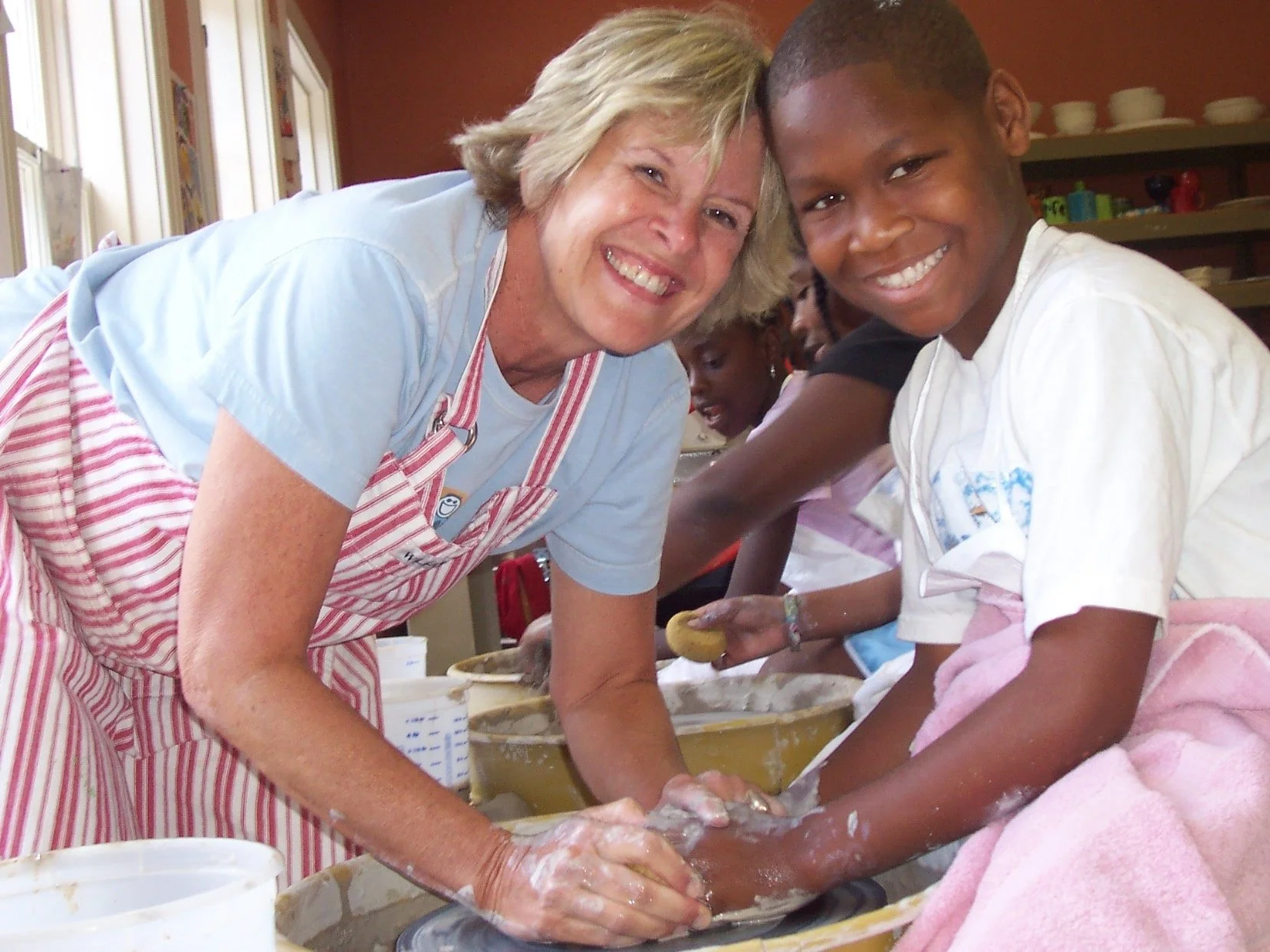
Jeremiah Project Ceramic Arts Program
Back in my seat in the Second Baptist church my white epiphany recognized that these 18–22-year-old students have been performing in black churches all their lives. They didn’t just begin practicing once they arrived at college. And, despite the limitations of the church’s sound system, the choir projected perfection worthy of professional choral groups who aren’t typically required to panhandle for dollars to keep their music alive.
My husband and I moved to Evanston, a town north of Chicago on Lake Michigan, in the middle of February. Part of the attraction of moving north in the coldest, deepest part of a famed Chicago winter, was the access to art. When I read in the Evanston RoundTable that the Howard University Gospel Choir would perform for free in downtown Evanston, I RSVPed with a resounding “yes, we will be there.” What we heard that night radiating from the synchronized voices was love and pride. Love of the way music and the arts make one feel. And pride in the legacy they carry on, the origins for which often began within the walls of an African American church. Many an artist’s career was launched by pastors, deacons, and elders who recognized and respected the power of the arts. And to that I say, Amen.